After imported wine arrives at the warehouse
From the loading bay to the labelling table: following a case of wine through the warehouse.
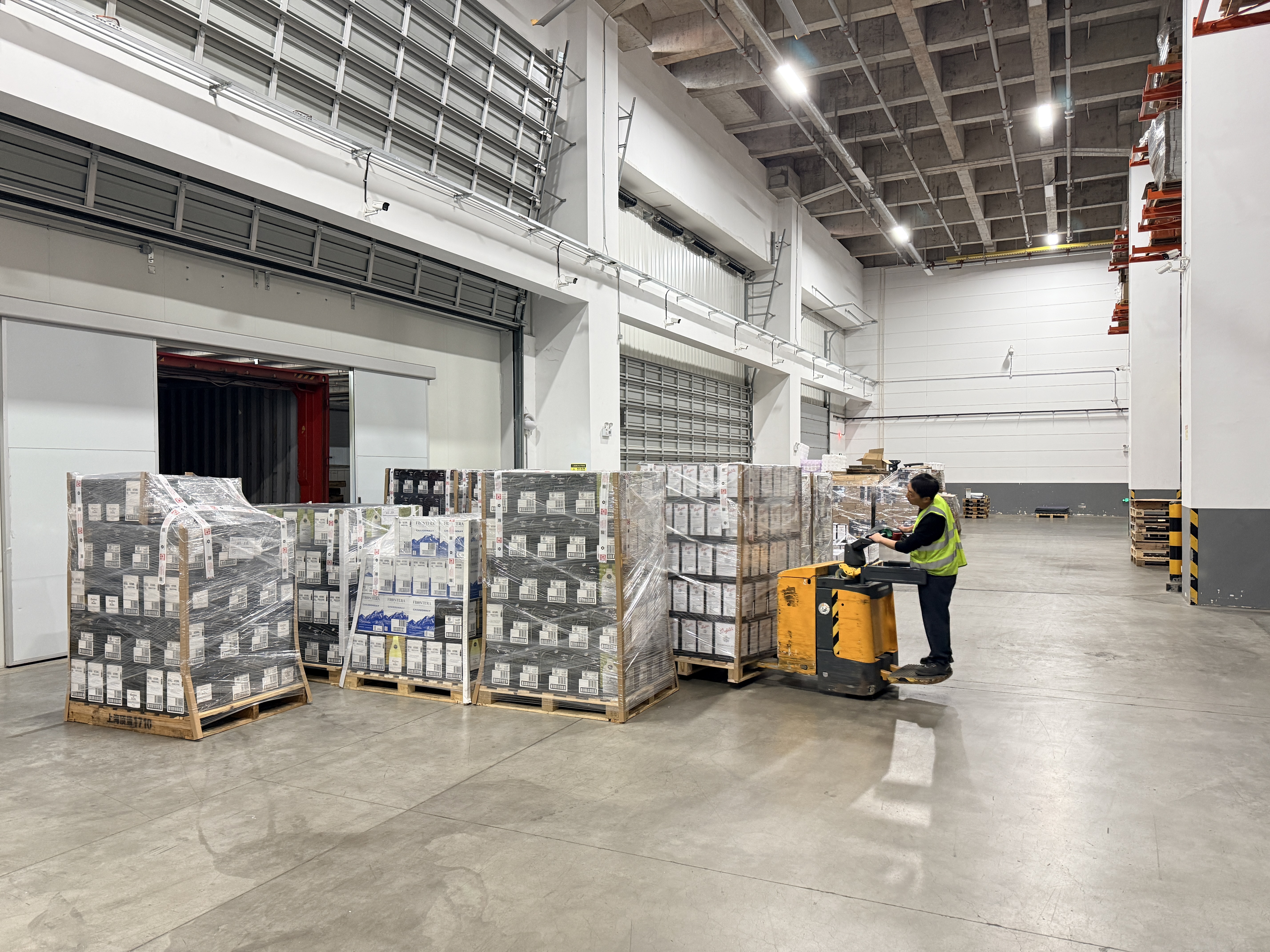
Beside the loading bay, pallets of wine wrapped in stretch film await handling. From the outside, there are carton markings, pallets and pack quantities to work with. At the worktable, open cases reveal the bottles and the labels waiting to be applied. These warehouse photographs show several stages after imported wine arrives.
First, check the delivery
At receiving, the delivery details are checked against the wine in front of the team: product, format, case count and bottles per case. Different pack sizes need separate counts. Deliveries of the same wine arriving in separate batches also need to be distinguished.
Crushed cartons, damp bases and leaning loads are things to look for at this point. If something is wrong, photographs and a record of the affected cases help the client decide what to do next. Once goods have been stored, unpacked or repacked, their original condition is harder to establish.
A place on the rack
The photograph shows yellow location labels along the rack beams. A location is an address inside the warehouse. It tells the picking team where to find a particular wine and batch.
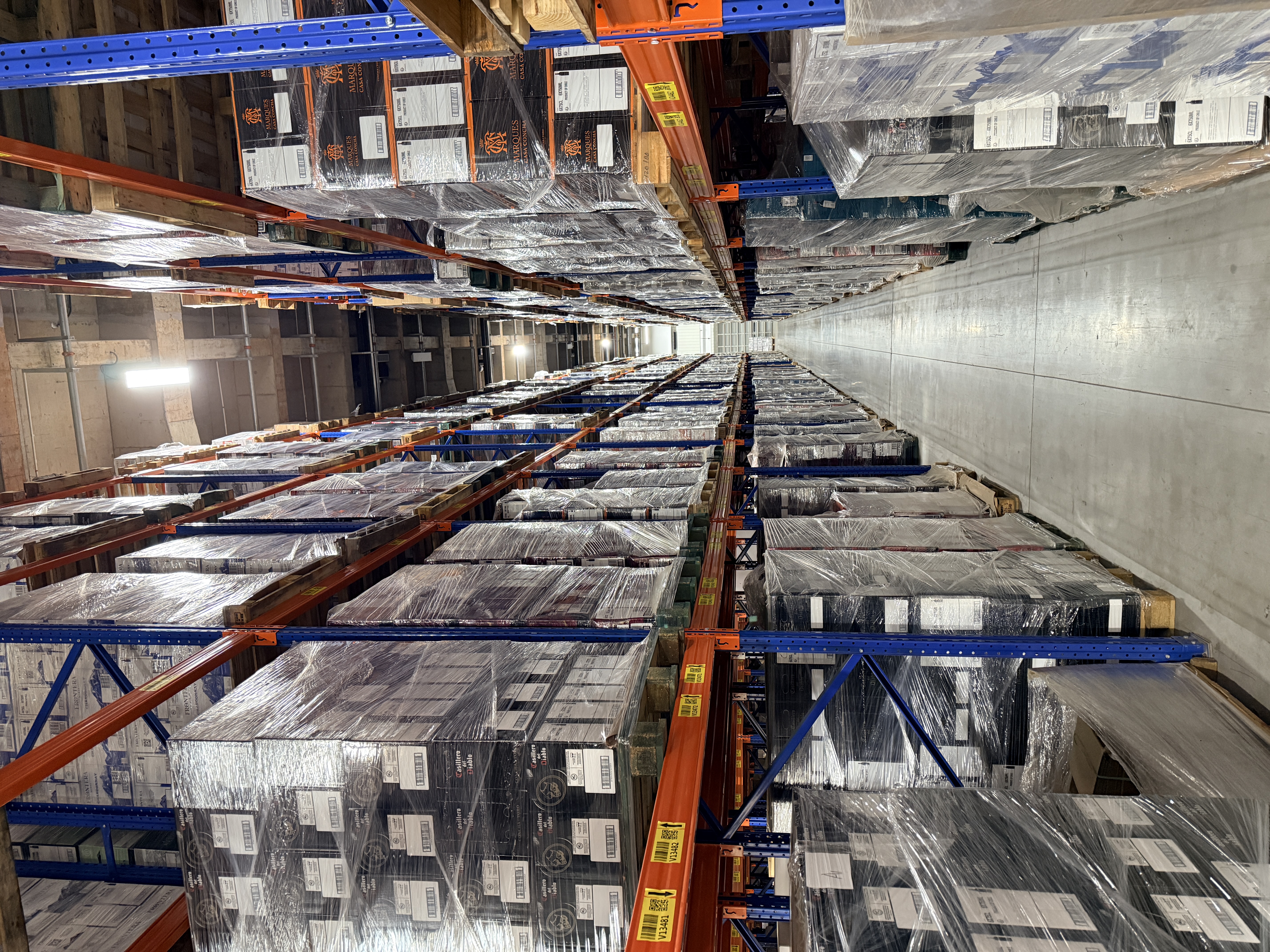
Vintage matters, too. Two similar cartons can hold different vintages, and the same wine can come in different case formats. When a client specifies a batch, that is the batch to pick.
Moving a pallet, removing a few cases or changing a location also means updating the stock record.
A stop at the worktable
The closer photograph shows bottles in open cases, labels beside them and an operator peeling a label from its backing. Here, handling moves from pallets and cases to individual bottles.
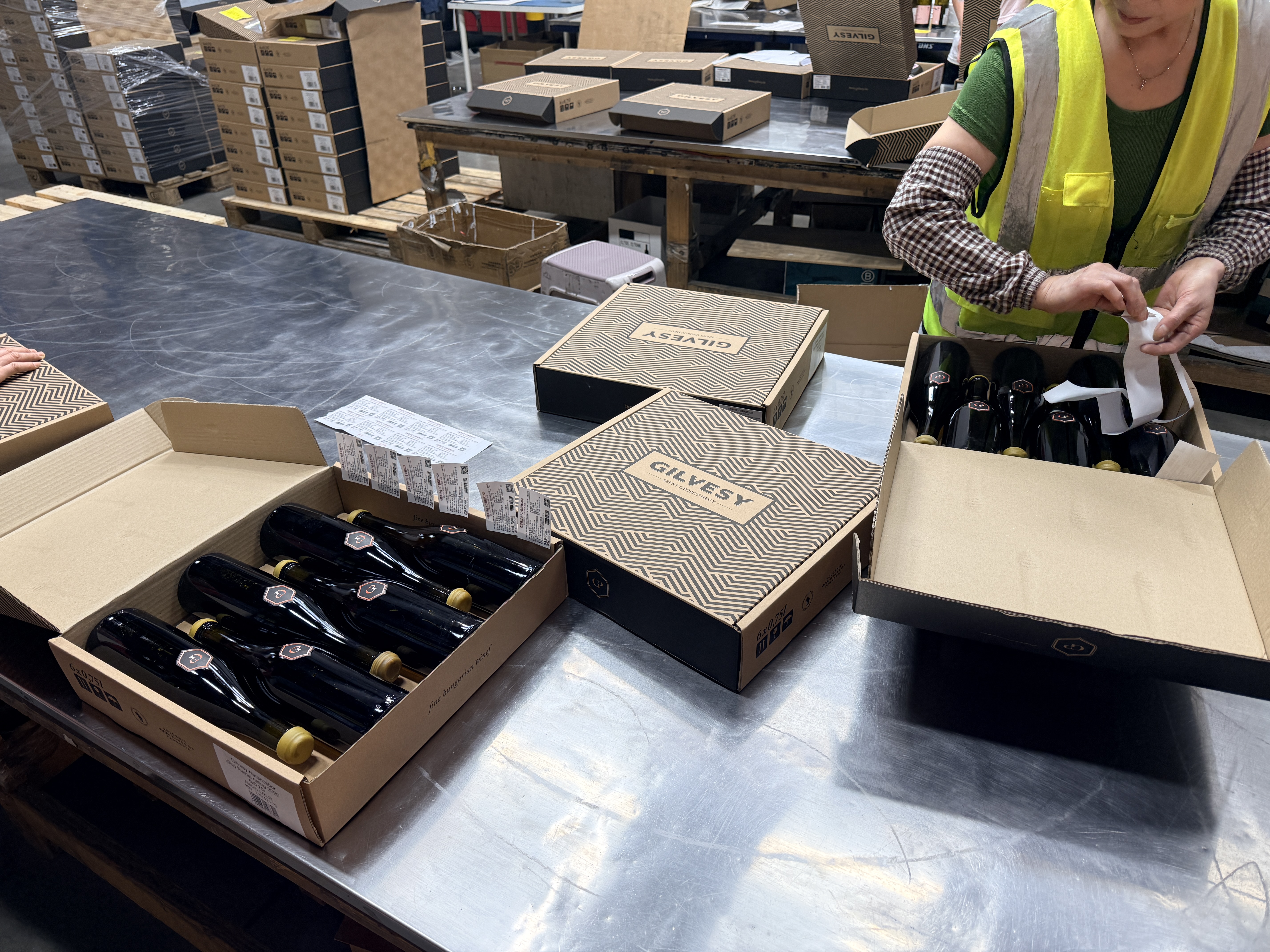
Labelling, coding, changing cartons and gift packing are arranged to the client’s instructions. For a change of cartons, that means agreeing on the box, bottles per case and whether to keep the original packaging before starting. Finished goods, remaining stock and unused materials then need separate counts.
Dispatch follows the order
A delivery does not necessarily leave the warehouse all at once. Some orders call for full pallets; others for smaller quantities sent to different addresses over time. Picking follows the dispatch instruction, with the wine, vintage, format and quantity checked before loading is arranged.
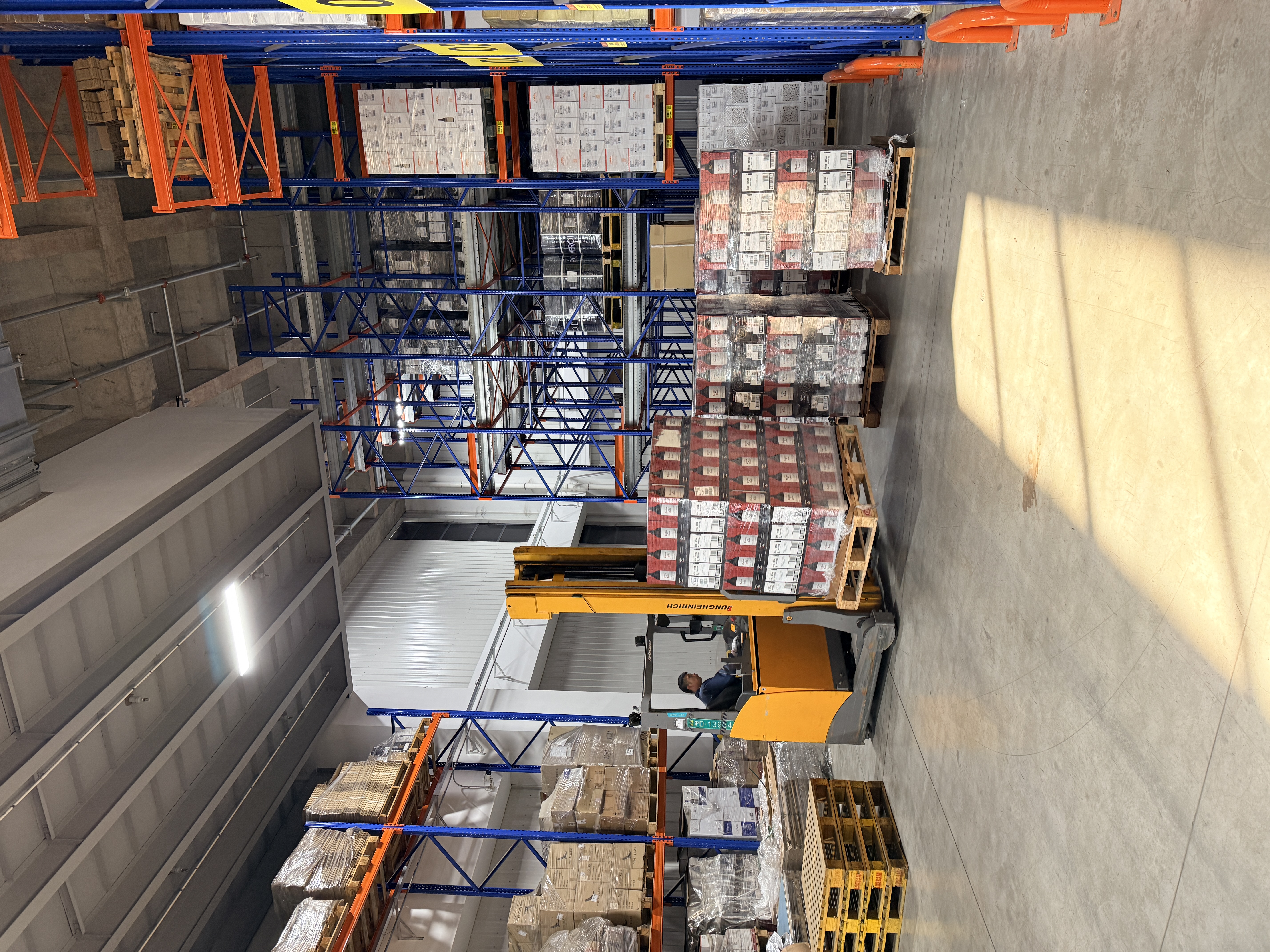
If the delivery address or quantity changes, customer service and the warehouse team need the same updated instruction. The records should also answer a client’s later questions about the batch dispatched, the quantity sent and the balance in stock.
If you have wine due to arrive, send us the product details, quantities and expected arrival date. Include any labelling, repacking or split-delivery requirements so that the work can be planned in advance.
We can then discuss the arrangements for your shipment.